
Buying a gear dryer is easy. Knowing exactly how it fits into your household is harder.
The questions that actually matter are not about specs. They are about logistics. Where does it live?
Buying a gear dryer is easy. Knowing exactly how it fits into your household is harder. The questions that actually matter are not about specs. They are about logistics. Where does it live? How does it handle a family of four coming home soaked after a full day on the mountain? What happens when you have five people sharing three pairs of gloves? Can one unit gear dryer handle everything, or do you need more than one? This post answers those questions the way a gear dryer owner would — not a product page.
The Two-Person Household: Weekend Skiers
For couples or pairs who ski on weekends and store gear between sessions, the primary goal is having dry equipment by the following Saturday. There is no urgency. The dryer runs overnight and gear is ready by morning. A 2-pair unit handles boots and gloves for two people in a single cycle. If helmets are in the rotation, look for a unit that includes a helmet holder or attachment point rather than leaving helmets to air dry on a shelf. The Zephyr line from Alpine Dryers is a practical fit here. Room-temperature air, quiet enough to run in a bedroom closet, and it handles gloves and boots in one load. The wall-mount option keeps the mudroom floor clear without losing any drying capacity. Shop: Zephyr 2-Pair | Zephyr 2-Pair Wall-Mount.
The Family of Three or Four: The Most Common Scenario
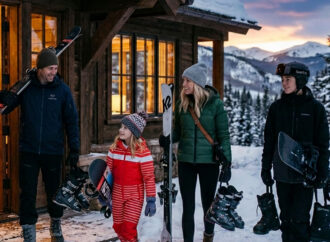
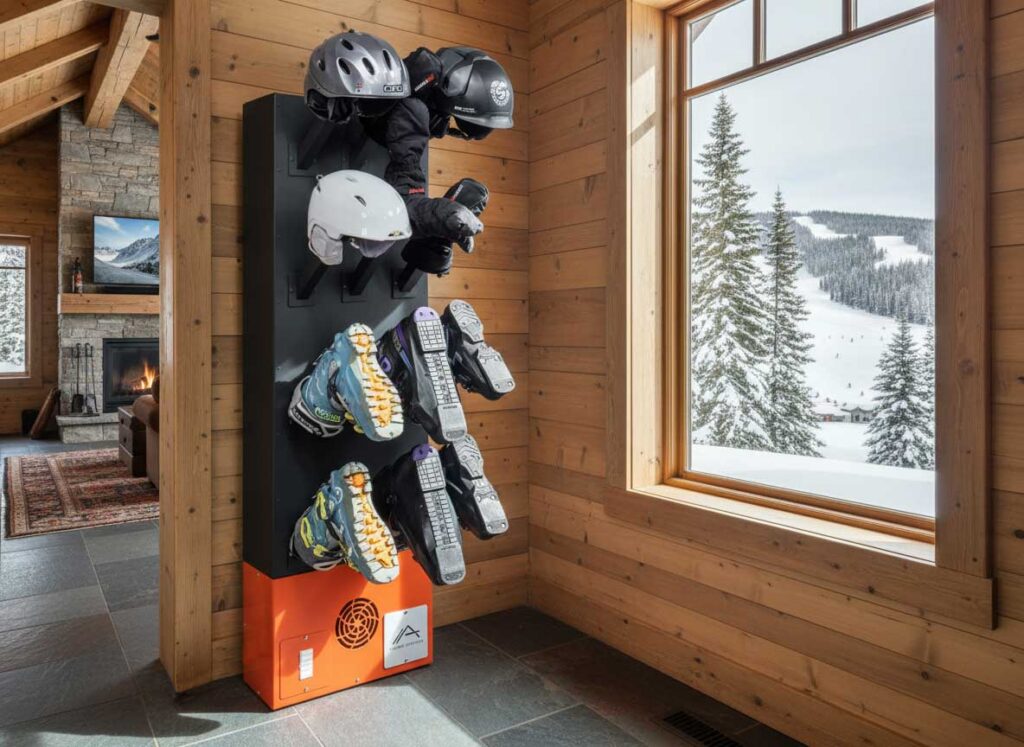
This is where gear dryer decisions get real. Four people returning from a ski day means eight boots, four pairs of gloves, four helmets, and potentially four sets of mid-layers or socks that got wet anyway. Most families in this range make one of two mistakes: they buy a 2-pair unit and run it in shifts all night, or they buy a cheap 6-pair unit with a single shared fan and discover that the ports farthest from the motor never fully dry. The Alpine Dryers PRO line solves both problems. The Alpine Dryers PRO 6-Pair gives you six ports with individual high-velocity blower output — not shared airflow from one fan — so every boot dries at the same rate. Add helmet holders and the full family load goes on in one setup. If the family skis multiple days in a row, the PRO’s timer options matter. Set it for a 4-hour cycle, wake up to dry gear, and it shuts off automatically.
The Family of Five or Six: Think in Shifts or Scale Up
Six people generate more gear than any single 6-pair unit can handle in one cycle unless you get strategic about what goes on first. The practical approach most larger families use: boots and gloves go on the dryer immediately after returning home. Helmets air dry on hooks or a shelf while boots run. After 3-4 hours, boots come off dry, helmets go on with the helmet attachment for a final cycle overnight. The cleaner solution is the Alpine Dryers PRO 12-Pair. It handles the full load — including helmets — in one setup. For families who ski 3 or more days per week through the season, the 12-pair unit pays for itself in convenience and in gear longevity, since consistently wet equipment breaks down faster than gear that dries completely after every use.
What Goes on the Dryer and What Does Not
Gear dryers are designed for boots, shoes, gloves, and similar closed-end items. Most units also handle helmets with the right attachment. Some items do not belong on a gear dryer:
- Shell pants and jackets: hang these. Forced air through a small port does nothing for a full garment.
- Wet base layers and socks: hang or use a drying rack. A gear dryer is not a clothes dryer.
- Goggles: set these aside. The foam seal around the lens can degrade with direct heat exposure over time.
Where the Dryer Actually Lives in Most Homes
- Mudroom or garage entry: the most common. Gear comes off at the door, goes straight onto the dryer, and never comes into the main living space wet.
- Ski locker or dedicated gear closet: works well with a wall outlet. Wall-mount units are particularly good here.
- Basement utility room: keeps noise out of the main living area and gives gear a dedicated drying zone away from everything else.
Daily Use vs. Weekly Use: Does It Change What You Buy?
It does. For daily users who ski 5-7 days per week, cumulative heat exposure becomes a real factor. Repeated daily heated forced air shortens the lifespan of boot liners, adhesives, and foam materials faster than most buyers expect. For daily users, the Zephyr line is built specifically for this pattern. Room-temperature air only — no heat-related degradation over time. The industrial-grade fan maintains full airflow at every port even when the unit is fully loaded. For weekend or occasional users, the Alpine PRO’s heat option and 2-12 hour timer give you speed when you need it without committing to daily heat exposure.
The Right Setup for Your Situation
- Couple or pair, weekend skiers: Zephyr 2-Pair | Zephyr 2-Pair Wall-Mount
- Family of 3-4, weekly use: Alpine Dryers PRO 6-Pair
- Family of 5-6, weekly or frequent use: Alpine Dryers PRO 12-Pair
- Daily users, premium boot protection: Zephyr 4-Pair | Zephyr 4-Pair Wall-Mount
All Alpine Dryers PRO and Zephyr models are available at CozyWinters, which carries the full line including wall-mount configurations, helmet holders, and boot hose attachments for tall ski boots.