
Anyone who has dropped $400+ on ski boots, $500+ on Gore-Tex hiking boots, or a few thousand on a custom-built mountaineering setup eventually asks the same question: is it actually safe to put this gear on a boot dryer?
Anyone who has dropped $400+ on ski boots, $500+ on Gore-Tex hiking boots, or a few thousand on a custom-built mountaineering setup eventually asks the same question: is it actually safe to put this gear on a boot dryer?
The answer depends on three things: how hot the dryer runs, how long the gear sits on it, and what the gear is made of. Get all three right and a dryer extends the life of premium gear by years. Get them wrong and you can quietly damage adhesives, foam, and waterproof membranes in ways that don’t show up until the gear fails in the field.
This is a practical guide to what’s actually at risk, what isn’t, and how to dry premium gear without shortening its life.
The Three Variables That Determine Risk
1. Temperature
Most consumer boot dryers fall into one of three temperature classes:
- Ambient / room-temperature — moves unheated air. Safe for everything. The slowest method but the only one with effectively zero material risk.
- Low heat (95-105°F / 35-40°C) — slightly above body temperature. Safe for nearly all materials when used in normal cycles. The standard for quality home gear dryers.
- High heat (commercial-grade, 110-130°F+) — used in ski resorts and rental shops to turn gear over fast. Risk to adhesives and foam grows quickly with cumulative exposure.
As a working rule: heat at or below 105°F is safe for the materials in 95% of consumer outdoor gear. Above 110°F, every additional 10°F roughly doubles the rate of adhesive degradation over time.
2. Exposure Time
A 90-minute dry cycle at 105°F does approximately nothing to gear. The same temperature held for 12 hours, every day, for a season, can degrade adhesives meaningfully. This is why auto-shutoff timers matter — not for the single cycle, but for what happens when you forget the dryer running on a weekend trip.
If your dryer doesn’t have a built-in timer, plug it into a $15 outlet timer and set the cycle manually. The two-hour timer is one of the cheapest pieces of gear protection you can buy.
3. Material Composition
Different materials respond to heat and airflow differently. The next section breaks down what actually happens to each one.
Material-by-Material Breakdown
Gore-Tex and Other Waterproof-Breathable Membranes
Verdict: Safe at low heat or ambient. Avoid sustained high heat.
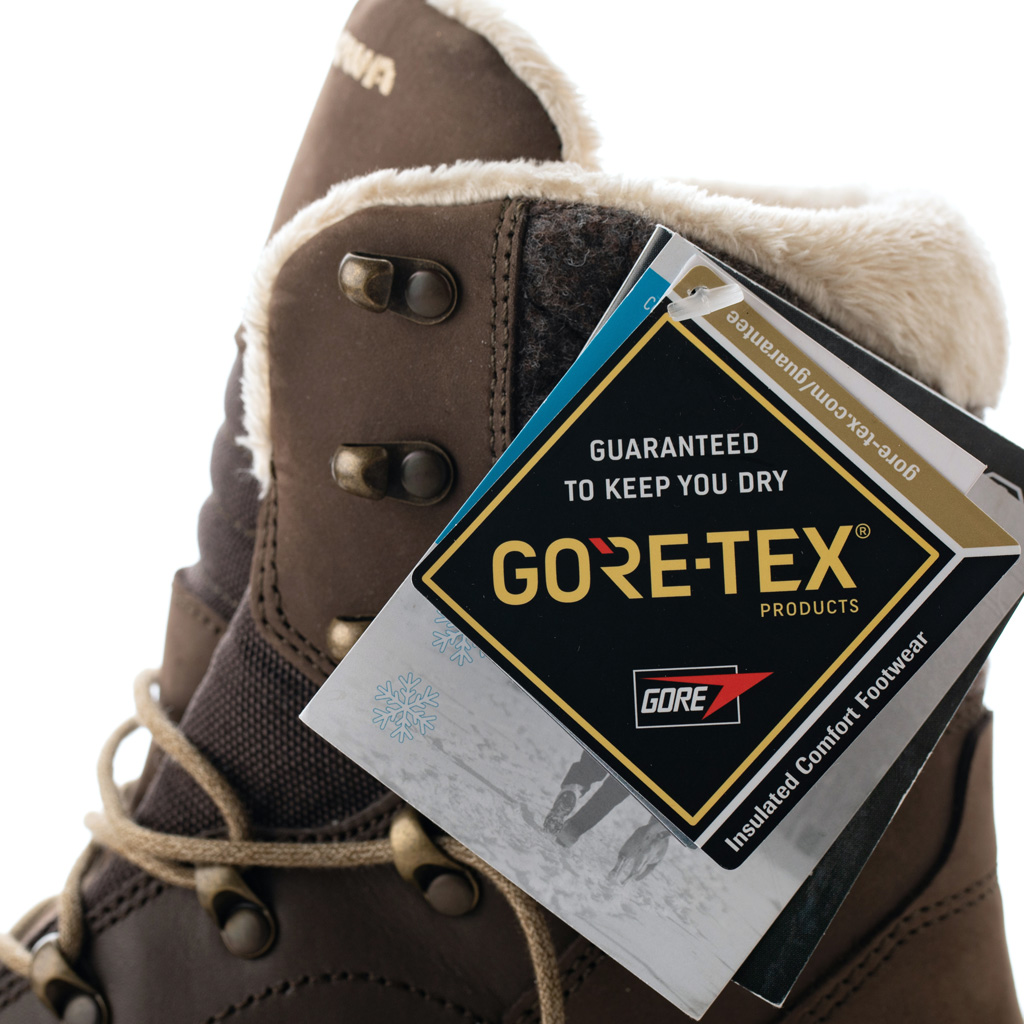
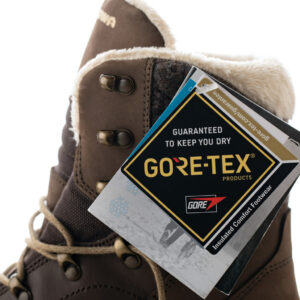
Gore-Tex is a polytetrafluoroethylene (PTFE) membrane laminated between fabric layers, with a durable water-repellent (DWR) finish on the outer face. The PTFE membrane itself is heat-stable to well above any boot dryer’s output — the membrane is fine. The risk is to the laminate adhesive holding the membrane to the inner and outer fabric layers, and to the DWR coating.
At low heat (95-105°F), neither is at meaningful risk. The DWR can be degraded over time by heat and detergent, but boot-dryer-level heat over reasonable cycle times doesn’t register. Most manufacturers explicitly approve tumble drying on low heat to reactivate DWR — boot dryers run cooler than tumble dryers.
At high heat over long cycles, the DWR can lose effectiveness gradually, and seam tape adhesives can soften slightly with each exposure. Cumulative wear over years of daily commercial-grade drying can shorten the membrane’s effective life. For home use on quality gear, low heat is the safe call.
Foam Liners (EVA, PU, Custom-Molded)
Verdict: Most vulnerable material in the boot. Use ambient or low heat only.
Boot liner foams — EVA, polyurethane, and the proprietary blends in custom-molded ski boots — are the most heat-sensitive component in most outdoor gear. Foam structure is created by gas bubbles in a polymer matrix; sustained heat above 110°F can soften the matrix enough that the foam loses some rebound, especially under repeated cycles.
The damage pattern is gradual: liners feel slightly less supportive each season, lose their custom-molded shape faster, and need replacement earlier than they should. Most users don’t notice — they just chalk it up to “boots wearing out.” In reality, much of that wear is heat-accelerated breakdown from drying habits.
For custom-molded liners (Intuition, Surefoot, Salomon Custom Shell, etc.), this matters more. The molding process aligns foam structure to your foot shape; aggressive heat partially un-molds that structure over time. Manufacturers of custom liners typically recommend ambient-temperature drying or, at most, low heat with short cycles. The Zephyr line of dryers — designed around room-temperature air specifically — was built for this kind of daily use on heat-sensitive premium gear.
Leather (Full-Grain, Nubuck, Suede)
Verdict: Low heat or ambient. High heat causes cracking.
Leather contains natural oils that keep it pliable. Heat drives those oils out faster than they can be replenished by leather conditioners, and leather that loses its oil content cracks at flex points — especially the toe break and heel.
Leather hiking boots can sit on a low-heat dryer (95-105°F) for typical drying cycles without issue. But leather should never be force-dried at high heat, and leather should never be dried while in direct contact with a heat source. The forced-air design of a proper boot dryer puts moving air through the boot, not heat against the leather surface — that’s the safe method.
After drying, leather benefits from a conditioner application every 5-10 dry cycles. This replaces oils that move out during drying and dramatically extends leather lifespan.
Boot Adhesives (Sole Bonding, Internal Construction)
Verdict: Low heat is safe in normal use. High heat over years can fail bonds.
Modern boot construction relies heavily on adhesives — sole-to-upper bonding, midsole layers, internal reinforcements. These adhesives are typically polyurethane-based, with glass transition temperatures (the point at which they soften) ranging from about 130°F to 180°F.
A boot dryer running at 105°F is well below those thresholds and produces no measurable risk in normal use. The concern is heat exposure that approaches or exceeds the glass transition temperature — which doesn’t happen on quality home dryers but can happen with commercial-grade high-heat units used daily over years.
The most common adhesive failure in dried boots isn’t from drying heat at all — it’s from drying boots near radiators, wood stoves, or car heaters, where surface temperatures can easily exceed 150°F. If you can hold your hand on the boot comfortably during drying, you’re fine.
Synthetic Insulation (PrimaLoft, Thinsulate, Down)
Verdict: Generally safe at low heat. Down handles heat better than people assume.
Synthetic puff insulation handles low-heat drying well — many manufacturers specifically recommend low-heat tumble drying. Boot dryer temperatures are gentle by comparison.
Down insulation in boots and gloves does fine on low heat or ambient. The myth that down should never be heated comes from down jackets washed in industrial machines, where extreme temperatures plus harsh detergent can damage the down clusters. Boot-dryer-level heat without detergent is safe.
Rubber and Plastic Shells
Verdict: Universally safe at any reasonable boot dryer temperature.
The plastic shells of ski boots, the rubber compounds in hiking boot soles, and the synthetic rubbers in waders are all formulated for use in conditions vastly more extreme than any boot dryer. Heat exposure on a dryer is not a meaningful risk to these materials.
Summary Table: What Heat Setting for What Gear
| Gear Type | Ambient | Low Heat (95-105°F) | High Heat (110°F+) |
| Ski boots, foam liners | Ideal | Safe | Avoid for daily use |
| Custom-molded liners | Ideal | Limit cycle length | Avoid |
| Leather hiking boots | Safe | Safe | Avoid |
| Gore-Tex / waterproof boots | Safe | Safe | Limit exposure |
| Synthetic running shoes | Safe | Safe | Limit exposure |
| Insulated gloves and mittens | Safe | Safe | Generally OK |
| Hockey skates and pads | Safe | Safe | Generally OK |
| Wading boots and waders | Safe | Safe | Generally OK |
| Work boots (rubber, leather) | Safe | Safe | OK for occasional use |
How to Choose the Right Dryer for Material Safety
If you regularly dry premium gear and material longevity matters to you, prioritize three features when shopping:
- Ambient or selectable heat. The ability to run unheated room air at full airflow lets you dry sensitive gear without any heat-related risk. Some dryers — like the Zephyr line — are designed around this principle and run room-temperature air only.
- Self-regulating heat (not high-heat blast). Quality dryers limit heat output regardless of run time. Cheap or commercial-grade dryers can run hot enough to damage gear over long cycles. Self-regulating heaters that hold at 95-105°F — like the ones built into the Alpine Dryers PRO line — are the safe range.
- Auto-shutoff timer. Even a safe temperature becomes risky if the dryer runs for 16 hours unattended. Built-in 2-12 hour timers are standard on better units and worth their weight in saved gear.
Forced-air dryers using high-velocity blowers (rather than fans) maintain consistent airflow at every port even when fully loaded — meaning the unit can dry gear faster at lower temperatures, which is ideal for material safety. We cover the airflow-vs-heat tradeoff in detail in this companion post.
The Bottom Line
Boot dryers are safe for nearly all outdoor gear when two conditions are met: heat stays at or below 105°F, and run times are limited to what’s actually needed (1-12 hours, not days). Above those limits, cumulative damage can shorten the life of foam liners, adhesives, and waterproof coatings — quietly, over years.
The fastest path to ruined gear isn’t buying a dryer. It’s drying gear in front of a wood stove, on a radiator, or in the back of a hot car — all of which produce surface temperatures far above what any boot dryer reaches.
If you’re investing in premium gear, an ambient-air or low-heat forced-air dryer is one of the best ways to extend its life. The math on a $400 pair of ski boots that lasts six seasons instead of three works out clearly in favor of getting drying right.
Where to Buy
Both Alpine Dryers and Zephyr — along with PEET, DryGuy, Cyclone, and the rest of the major brands — are available at CozyWinters, which carries over 60 dryer models so you can compare every option in one place. Alpine Dryers is also available directly through Alpine Dryers.
Most Popular Models
- Alpine Dryers PRO 6-Pair — the standard for families and serious skiers, expandable to 24 pairs.
- Alpine Dryers PRO 12-Pair — for larger households, ski homes, or shared mudrooms.
- Zephyr 4-Pair — room-temperature air, designed for daily use on premium gear.
- Zephyr 4-Pair Wall-Mount — same dryer, wall-mounted configuration.
- PEET Original — silent, low-wattage, single pair, 25-year warranty.