
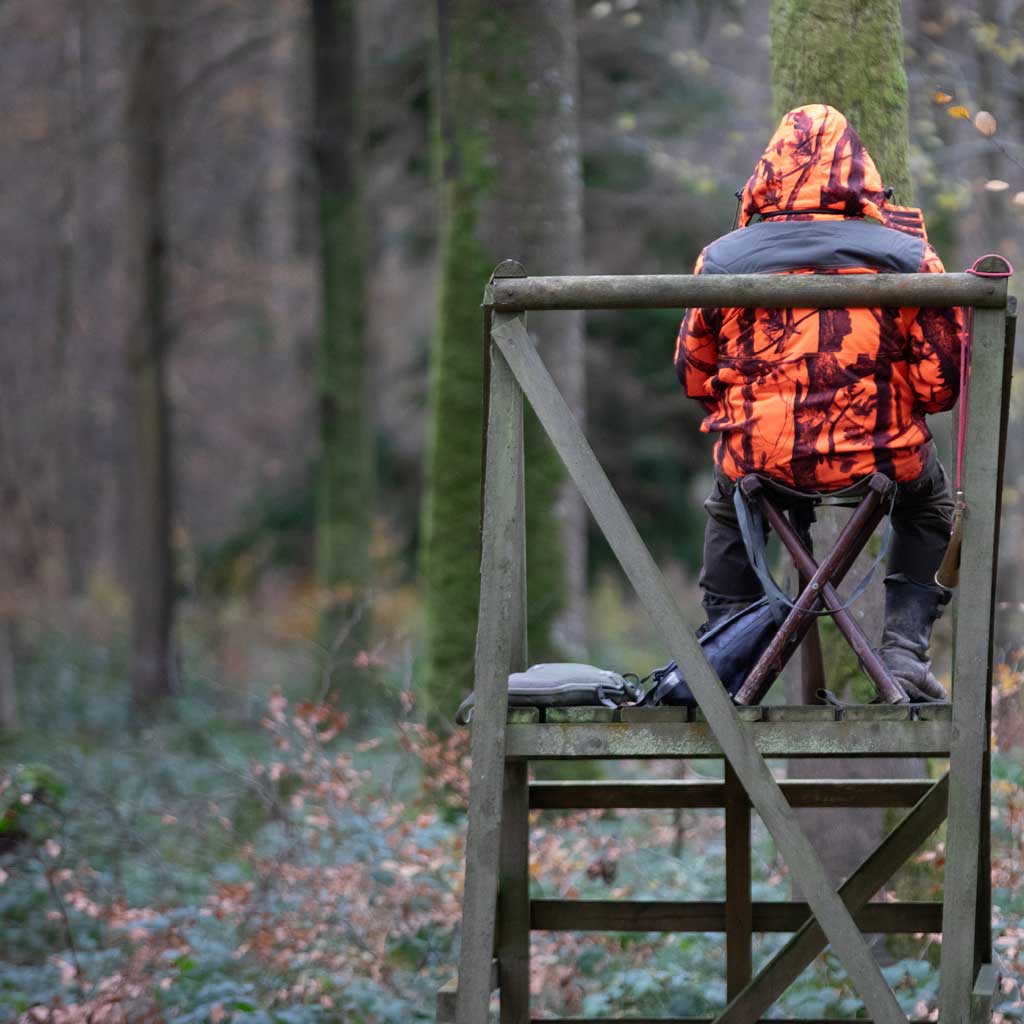
If you hunt anywhere east of the Rockies or north of the Mason-Dixon line, your boots get wet. Stream crossings, creek bottoms, dew-soaked predawn fields, snow-melt seeping through stitching, sweat from hiking in cold weather and then standing still in a stand — by the end of an opening-week morning, a typical hunting boot is
If you hunt anywhere east of the Rockies or north of the Mason-Dixon line, your boots get wet. Stream crossings, creek bottoms, dew-soaked predawn fields, snow-melt seeping through stitching, sweat from hiking in cold weather and then standing still in a stand — by the end of an opening-week morning, a typical hunting boot is carrying half a cup of moisture between the liner and the shell.
That moisture matters more in hunting than in any other outdoor pursuit. It costs you scent control because bacteria in damp boots produce volatile compounds whitetails and elk can smell from impressive distances. It costs you warmth because moist boots transfer body heat to the ground 10-20x faster than dry ones, which is the difference between sitting through a four-hour sit and tapping out at hour two. And over a multi-season timeline, it costs you the boots themselves — most premium hunting footwear is killed by repeated wet-dry cycles long before the soles wear out.
This guide walks through what actually matters when choosing a dryer for hunting boots — without pushing you toward any particular brand. The right answer depends on what you hunt, where you hunt, what your boots are made of, and how many pairs you need to dry at once.
There is no single “best” boot dryer for hunting. There are good answers for cold-weather rubber-boot users, different good answers for dry-climate leather-boot users, and different good answers again for households where multiple hunters dry multiple pairs each weekend.
Why Hunting Boots Are Harder to Dry Than Ski Boots
Ski boots have one job: stay dry from the snow side and let body moisture escape. Hunting boots fight a harder battle. They get attacked from the outside (stream crossings, mud, wet brush, rain), from the inside (heavy sweat from active hiking, then condensation when you stop moving), and from below (cold ground wicking moisture through the sole over hours of stand-sitting). And they’re built from material combinations — rubber over neoprene over leather over insulation — that each dry at different rates.
A rubber-shell pac boot like a LaCrosse Alphaburly or a Muck Arctic Pro can take 48-72 hours to dry passively because the rubber exterior is impermeable. Air doesn’t move through the shell — moisture only escapes through the cuff opening. A leather backcountry boot like a Crispi or Kenetrek dries faster on the outside but the insulation layer can hold moisture for days. Either way, the closed-end structure means passive drying simply doesn’t work for any hunter using boots more than once a week.
 The Three Things That Actually Matter
1. Targeted Interior Airflow
The most important variable in drying any hunting boot is whether air actually moves through the interior cavity. Standing the boot upside down on a kitchen radiator dries the rubber but leaves the insulation soaked. Cramming newspaper inside absorbs surface moisture for the first few hours and then saturates. Both methods leave deep liner moisture behind.
Forced-air dryers solve this by pushing air directly into the foot chamber through a port stand. Cheap units use a single shared fan across multiple ports; better units use either a separate blower per port or a high-CFM blower with engineered ducting so airflow stays consistent regardless of how many boots are on the unit. For hunting boots specifically — which are taller, deeper-cavity, and slower-drying than most footwear — airflow per port matters more than total fan size.
2. Heat Setting (and the Ability to Turn It Off)
Heat speeds up drying but introduces its own problems. Hunting boots are typically built from material combinations that each tolerate heat differently:
- Rubber shells — broadly safe at typical boot-dryer temperatures (95-105°F). High commercial heat over years can dry out the rubber and reduce flex, but home use isn’t a real concern.
- Leather uppers — vulnerable to heat over time. Leather oils evaporate faster than conditioner can replace them; the boot stiffens, then cracks at flex points. Low heat is fine; high heat is not.
- Adhesives — sole-to-upper bonding fails fast above 130°F. Boot dryers at 95-105°F are well under this threshold, but boots drying in a hot car or near a wood stove are not.
- Foam insulation — gradually loses rebound with repeated high-heat exposure. Most hunting boots use closed-cell foam that’s more heat-tolerant than ski boot liners, but the principle still applies.
- Gore-Tex and waterproof membranes — heat-stable at boot-dryer temperatures; the laminate adhesives and DWR coatings degrade slowly with cumulative exposure but not in normal use.
The practical rule: a dryer that runs at room temperature or with selectable heat at 95-105°F is safe for any hunting boot ever made. A dryer that runs only at fixed high heat over 110°F is not the right tool for premium boots used daily over a long season.
3. Scent Control
This is the variable hunting-specific to the point of being unusual. The volatile organic compounds that bacteria produce when feeding on sweat and dead skin in a damp boot are detectable to whitetail deer at concentrations far below human thresholds. Boots that smell faintly funky to you are full-strength alarms to a buck downwind.
The fix is moisture removal — bacteria can’t produce odor compounds without water. A dryer that gets a boot’s deep interior genuinely dry between hunts crashes the bacterial population to a level where odor production is minimal. Nothing else matters as much for scent. Carbon-impregnated sprays, ozone treatments, and scent-killer detergents help around the margins, but they’re working against an active bacterial colony if the boot still holds moisture inside the insulation.
There’s a related question worth raising: does the dryer itself introduce scent? Some hunters worry about HEPA filters, plastic offgassing, or motor lubricant smell transferring to boots during drying. In practice this is a minor concern — most modern dryers (PEET, DryGuy, Alpine, Zephyr) use brushless motors and inert plastics that don’t outgas detectably. If you want to be cautious, run the dryer in a garage or basement rather than a closet where scents can accumulate, and avoid storing scented detergents or solvents near the unit.
What to Match to Your Hunting Setup
Rubber Boot Hunters (Pac Boots, Knee-Highs, Wading)
LaCrosse Alphaburly, Muck, Bogs, Lacrosse Aerohead — rubber shells, neoprene liners, often with felt or fleece footbeds. These are the slowest-drying boots in the hunting world. Passive drying is essentially hopeless: the rubber exterior blocks evaporation, and moisture can only escape through the cuff.
What works: forced-air dryers with port stands tall enough to deliver air deep into the boot cavity. Heat helps significantly (these boots are heat-tolerant), and the drying time difference between an ambient unit and a heated unit is substantial — often 8 hours versus 2 hours for a soaked boot.
Common matches: A two-port unit like the DryGuy Force Dry DX handles most single-hunter setups. For households with multiple rubber-boot hunters, multi-pair forced-air units with longer port stands work well. Convection-only dryers (PEET-style) eventually work on rubber boots but take 12+ hours, which is fine for once-a-week hunts and inadequate for daily season-long use.
Leather Backcountry Boot Hunters (Western Big Game, Stalking, Mountain Hunts)
Crispi, Kenetrek, Schnee’s, Meindl, Lowa — full-grain leather uppers, often with Gore-Tex liners and traditional insoles. These boots cost $400-$700 and last 5-10+ years if treated well. They tolerate heat poorly over time.
What works: ambient-air or low-heat (95-105°F) forced air. Avoid commercial high-heat units; the cumulative heat exposure shortens leather life noticeably. These hunters are the right audience for room-temperature-only dryers that prioritize material safety over speed.
Common matches: The Zephyr line is built around this use case (ambient air only). The DryGuy Force Dry DX offers a selectable-heat option and is also widely used. PEET convection dryers work well for one-pair households where time isn’t critical and silence matters.
Multi-Hunter Households or Outfitters
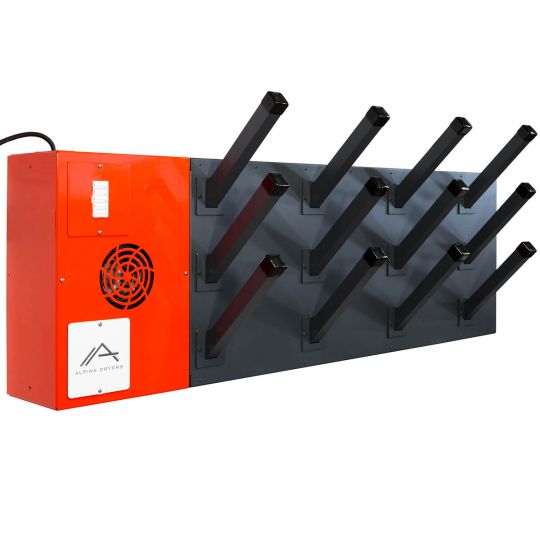
If you have two or more hunters in the household, or you run a hunting camp where multiple pairs need drying nightly, multi-port forced-air units are the only practical answer. A six-pair unit dries all family boots overnight; a 12- or 18-pair unit handles outfitter-scale loads.
Common matches: Alpine Dryers PRO 6-Pair (with optional expansion to 12, 18, or 24 pairs) is heavily used in the outfitter and lodge market. The DryGuy Dry Rack (radiant heat, expandable tiers) is a less expensive multi-pair option for installations where silence matters and drying speed is less critical.
Cold-Weather Late-Season Hunters
Late-season whitetail, predator hunting in deep winter, ice fishing — boots come off frozen, with ice crystals embedded in the laces and insulation. Drying these boots is fundamentally different from drying merely wet ones: you need to bring the boot above freezing throughout before evaporation can really begin.
What works: forced-air with heat. Ambient-only units struggle with frozen boots because the air entering the boot is at room temperature but the boot itself is below freezing — moisture stays trapped as ice rather than evaporating. A low-heat unit (95-105°F) thaws the boot fully within an hour, then dries it conventionally over the next 2-4 hours.
If you’re routinely hunting in sub-zero conditions, prioritize heated forced air over ambient-only designs. The Zephyr is excellent for moderate-climate hunting; the heated forced-air options are better for routine deep cold.
How Drying Methods Compare for Hunting Boots
| Method | Dry Time (Soaked Hunting Boot) | Suitable For |
| Boot left in mudroom | 48-72 hours | Not really suitable for repeat hunts |
| Boot near woodstove or heater | 6-12 hours | Damages leather, adhesives; can warp rubber |
| Newspaper stuffed inside | 24-48 hours | Marginal — surface moisture only |
| Convection dryer (PEET-style) | 10-16 hours overnight | Single pair, occasional hunters |
| Forced-air, ambient | 4-8 hours | Premium leather boots, scent-conscious hunters |
| Forced-air, low heat (95-105°F) | 1-4 hours | Most hunters; frozen boots; multi-pair households |
| Commercial high-heat blower | 30-90 minutes | Outfitters; not recommended for premium personal boots |
Common Mistakes Worth Avoiding
Drying boots in a hot car. Surface temperatures inside a closed car in summer can exceed 140°F. Adhesives soften, rubber cracks, leather oils evaporate. The boot looks fine immediately and fails six months later.
Drying with insoles in. Most hunting-boot insoles trap moisture against the foam liner below. Pulling them out separately can cut total dry time by 30-40%.
Drying with laces tight. Loosen everything — laces, gussets, side zippers. More open cavity equals more airflow surface area.
Skipping the post-season storage dry. A boot that goes into off-season storage with 5-10% residual moisture grows mold inside the insulation. Run a final long dry cycle before storage even if the boot feels fine.
Treating scent-control sprays as a substitute for drying. Carbon and ozone treatments work on dry surfaces. On wet bacterial colonies, they’re mostly cosmetic. Drying first, treating second.
The Honest Summary
For hunters who get out a few times a season in mild weather, a convection dryer (PEET-style) handles the job for under $80 and lasts decades. For weekly-or-more hunters in wet or cold conditions, forced-air dryers with ambient or low-heat settings are the right tool — they get boots genuinely dry between hunts, which is the single biggest variable in both boot longevity and scent control. For multi-hunter households, outfitters, and camps, multi-pair forced-air units in the six-to-18-pair range are essentially mandatory.
The wrong choice isn’t a particular brand — it’s a method that doesn’t actually get the boot dry through the deep interior between uses. Passive drying, woodstove drying, and newspaper-stuffing all qualify as wrong choices for any hunter using boots more than once a week.
Where to Compare Your Options
The dryers mentioned in this article — along with units from PEET, Alpine Dryers, Zephyr, DryGuy, Cyclone, Williams, Chinook, GearDryer, and several other brands — are boot dryers available at CozyWinters, which carries over 60 dryer models across every price point and use case. It’s the most convenient place to compare side-by-side specs (airflow, heat output, port count, timer features) for hunting boots since you can see every major brand in one catalog rather than checking each manufacturer’s site individually.
Models Commonly Referenced for This Use Case
- PEET Original — single pair, convection, silent. The entry point most buyers know.
- DryGuy Force Dry DX — forced-air with selectable ambient or 105°F heat. Compact two-pair design.
- Alpine Dryers PRO 6-Pair — multi-pair forced air for families, departments, or shared mudrooms.
- Zephyr 4-Pair — room-temperature air only, designed for heat-sensitive premium gear.
- DryGuy Dry Rack — silent radiant-heat rack, expandable, often used where noise matters.
Alpine Dryers is also available directly at alpinedryers.com, and most manufacturers sell through their own sites in addition to retail partners.