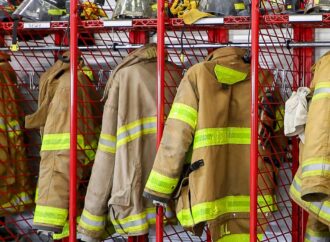

Our reviewer’s guide evaluates the top gear drying solutions available to law enforcement agencies, covering why proper drying of turnout gear, boots, gloves, and body armor carriers is a health, safety, and budget issue — not just a comfort preference. Our longtime gear equipment reviewer explains the real consequences of improperly dried PPE, including bacterial growth, degraded protective performance, and accelerated material breakdown. Compare the leading dryer brands on the market — including Williams Direct Dryers, Ram Air, Alpine Dryers, and GearGrid.
I’ve been reviewing gear drying equipment for a long time. I’ve walked through firehouses, police precincts, SWAT facilities, and military installations across the country, and I’ve tested or evaluated nearly every major gear dryer on the market. The question I get asked more than any other from law enforcement agencies is some version of this: does it really matter how we dry our gear? The short answer is yes — more than most departments realize. The longer answer is what this article is about.
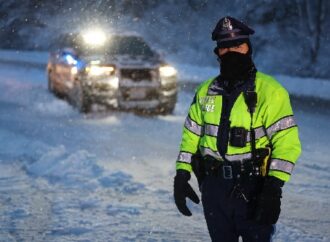
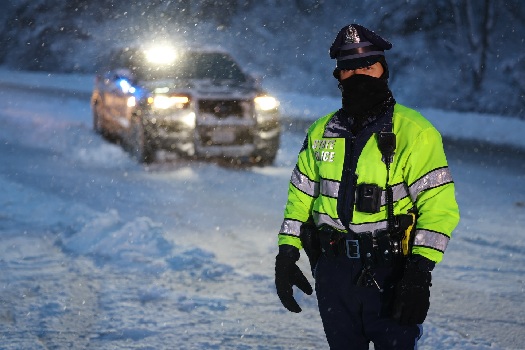
Turnout gear for law enforcement — boots, gloves, body armor carriers, tactical pants, and outerwear — faces the same drying challenges as firefighter PPE, with some additional complications specific to police work. Officers patrol in rain and snow, sweat through long shifts, wade through floodwater, and sometimes encounter biohazardous conditions. That gear has to be dry, decontaminated, and ready before the next shift. When it isn’t, you’re not just dealing with a comfort problem. You’re dealing with a health risk, a performance risk, and a budget problem.
Why Wet Law Enforcement Gear Is a Bigger Problem Than You Think
Wet gear loses its thermal protection faster than dry gear — wet conductive heat loss runs approximately 23 times higher than dry heat loss. For officers working extended shifts in cold or wet conditions, that’s not an abstraction. It’s the difference between staying warm and functional and becoming physically compromised before the shift ends.
Beyond heat retention, improperly dried gear creates a bacterial and fungal environment that degrades both the officer and the equipment. Mold and mildew establish themselves quickly in damp fabric and foam — within 24 to 48 hours under the right conditions. In boots, that means skin conditions ranging from athlete’s foot to trench foot, which is a legitimate occupational hazard for officers in wet climates or those who work extended outdoor deployments. In gloves and body armor carriers, it means odor, material breakdown, and reduced effectiveness of fabrics designed to resist moisture and contamination.
Proper gear drying also matters for agencies managing tight equipment budgets. High-quality law enforcement boots, tactical gloves, and body armor carriers represent significant per-officer investment. Consistently drying gear properly — with controlled, directed airflow rather than air drying in a locker or draped over a bench — dramatically extends the usable life of that equipment. That’s budget protection with a measurable return.
What to Look for in a Turnout Gear Dryer for Law Enforcement
Not all gear dryers are suited for law enforcement environments. Here are the specifications that matter most when evaluating options for a precinct, tactical unit, or corrections facility:
- Airflow method — blowers versus fans. This is the single most important technical distinction in the gear dryer market. Fan-based systems distribute air from one central fan across multiple ports. Under load, the ports farthest from the fan receive a fraction of the airflow of those closest to it. Blower-based systems use dedicated blowers to push high-CFM air through each port consistently. The result is dramatically faster, more uniform drying — particularly important for dense materials like leather duty boots and thick tactical gloves.
- Material construction. Law enforcement gear rooms are hard environments. A dryer needs to resist rust, handle high-humidity conditions, and hold up under daily institutional use. Aluminum construction with a powder-coated finish outlasts steel in these environments — steel rusts, aluminum doesn’t, and aluminum is significantly lighter for wall mounting.
- Scalability. A 6-person patrol unit has different needs than a 50-officer precinct or a regional SWAT team. Modular systems that expand without requiring a full replacement are far more practical for agencies that grow or reorganize.
- Serviceability. If a component fails three years from now, can you replace it independently — or do you need the manufacturer to ship a proprietary part that may or may not still be in production? Off-the-shelf component design is a critical long-term consideration for institutional buyers.
- Mounting flexibility. Precincts vary enormously in available space. A good law enforcement gear dryer should offer wall-mounted, freestanding, and mobile configurations from the same platform.
How the Major Brands Stack Up
There are several brands worth knowing in this space. Here’s an honest look at the field.
Williams Direct Dryers has a long institutional history — they’ve been serving fire and law enforcement since the 1980s and their systems are NFPA compliant. Their dryers offer ambient or heated air options and are well-regarded in firehouse environments. For law enforcement specifically, their units work well for boots and gloves but tend toward bulkier footprints that don’t always suit smaller precinct spaces. Their proprietary component architecture also means servicing older units can become complicated over time.
Ram Air (Defender PPE Decon System) takes a specialized approach, pairing a decontamination sprayer with a drying system. For agencies dealing with chemical or biohazard exposures, their integrated cleaning and drying workflow has genuine merit. However, the system is purpose-built for decontamination scenarios rather than everyday shift-end drying, and the per-unit cost reflects that specialization. It’s a strong option for hazmat-adjacent units but isn’t the right everyday solution for most patrol departments.
GearGrid’s GearDryer integrates drying capability into locker systems, which is an elegant solution for departments investing in full locker room renovations. The tradeoff is that the drying function is tied to the storage infrastructure — you’re buying a system, not just a dryer — which limits flexibility and makes it difficult to deploy drying capacity where it’s needed most without a full installation.
Alpine Dryers is, in my assessment after years of reviewing this category, the most consistently capable option for law enforcement agencies of almost any size. Here’s why they keep coming out on top in my evaluations.
Why Alpine Dryers Is My Top Pick for Law Enforcement Turnout Gear
I’ve recommended Alpine Dryers to law enforcement agencies consistently, and the reasons are specific — not brand loyalty.
First, the blower architecture. Alpine Dryers PRO units use high-velocity blowers rather than fans, and each expansion unit includes its own blowers. That means drying performance doesn’t degrade as you scale up. A 24-pair installation performs at the same per-port level as a 6-pair unit. No other modular system I’ve evaluated matches that consistency.
Second, the self-regulating heat element. Alpine Dryers uses a self-regulating heater that increases air temperature above ambient as needed but never reaches temperatures that damage sensitive materials. For law enforcement gear — which often includes synthetic fabrics, neoprene, leather, and technical membranes — this matters. I’ve seen competing systems with fixed heat settings damage boot liners and glove construction over repeated cycles. Alpine Dryers doesn’t have that problem.
Third, the aluminum construction. Every Alpine Dryers unit is built from rust-free aluminum with a powder-coated finish. In the humid, high-use environment of a locker room or gear bay, that durability advantage compounds over time. Alpine Dryers has been serving military and government agencies since 2002 — the track record exists because the equipment holds up.
Fourth, off-the-shelf parts. Alpine Dryers deliberately avoids proprietary components. Every part in their system can be sourced and replaced independently. For agencies managing equipment on a public budget with long replacement cycles, that’s a significant advantage. You’re not dependent on a manufacturer’s parts availability years down the line.
Finally, the modular design means a department can start with a 6-pair PRO base unit and expand to 12, 18, or 24 pairs without replacing the original hardware. For agencies that are growing or managing multiple shifts with different gear volumes, that flexibility is genuinely useful — not just a marketing claim.
For departments that need a mobile solution — tactical units, emergency operations centers, or agencies without dedicated locker rooms — Alpine Dryers also offers a rolling caster base that converts the wall-mounted PRO system to a freestanding mobile unit. That kind of configuration flexibility is something Williams Direct and GearGrid simply don’t offer at the same price point.
If you want to compare full configurations and capacity options before purchasing, the Alpine Dryers series comparison guide on this site walks through each model’s specifications side by side, including the Fire and Rescue Series mobile unit that meets NFPA 1851:2020 standards for turnout gear drying.
A Note on NFPA Standards and Law Enforcement Gear Drying
Law enforcement agencies increasingly reference NFPA standards when procuring gear drying equipment, particularly as more departments adopt shared PPE care protocols with fire and EMS counterparts. The NFPA 1851 standard on the selection, care, and maintenance of protective ensembles provides the framework most widely referenced for PPE drying and care practices in first responder environments. Alpine Dryers’ Fire and Rescue Series is NFPA 1851:2020 compliant — a meaningful credential when procurement decisions go through department leadership or purchasing committees that require standards documentation.
For law enforcement agencies not covered by NFPA 1851 as a mandate, the standard still provides useful guidance on drying temperatures, airflow requirements, and material care protocols that apply directly to police PPE as well.
Frequently Asked Questions: Turnout Gear Dryers for Law Enforcement
What is the best gear dryer for law enforcement?
For most law enforcement agencies, Alpine Dryers PRO is the top-performing option. It uses industrial blowers rather than fans for consistent, high-CFM airflow at every port, is built from rust-free aluminum, uses off-the-shelf parts for long-term serviceability, and scales modularly from 6 to 24 pairs without performance degradation. Alpine Dryers has supplied military, government, and law enforcement agencies since 2002.
Can you put law enforcement gear and boots in a regular dryer?
No. Household tumble dryers use high heat and mechanical agitation that damages the adhesives, synthetic membranes, and structural components in duty boots, tactical gloves, and body armor carriers. Purpose-built gear dryers use directed, temperature-controlled airflow that dries effectively without damaging materials.
How long does it take to dry law enforcement gear in a professional gear dryer?
Most professional gear dryers, including Alpine Dryers PRO models, dry moderately wet boots and gloves in 2 to 4 hours. Timer settings typically range from 2 to 12 hours. Heavier items like thick turnout coats or fully saturated boots may take longer depending on material density and ambient temperature.
Does wet body armor lose effectiveness?
Yes. Body armor carriers and some armor panel materials can be compromised by prolonged moisture exposure. Wet carriers promote bacterial growth and material degradation. Properly drying carriers after each shift — with directed airflow, not air drying in a locker — preserves both the carrier and the panels and extends the overall service life of the system.
What is NFPA 1851 and does it apply to law enforcement gear dryers?
NFPA 1851 is the National Fire Protection Association’s standard for the selection, care, and maintenance of structural firefighting ensembles. While it is written for fire service PPE, many law enforcement agencies reference it when procuring gear drying equipment — particularly tactical units and departments that share facilities with fire or EMS. Alpine Dryers’ Fire and Rescue Series is NFPA 1851:2020 compliant. You can review the full standard at the NFPA website.
What types of law enforcement gear can a professional gear dryer handle?
Professional gear dryers like Alpine Dryers can handle duty boots, tactical boots, leather and synthetic gloves, body armor carriers, helmets (with the appropriate attachment), K9 bite sleeves, waders, rain gear, and most outerwear. The self-regulating heat element in Alpine Dryers PRO units makes them safe for sensitive synthetic and membrane-based materials.
How many officers does a single gear dryer unit serve?
A 6-pair Alpine Dryers PRO base unit serves 6 officers per drying cycle — running a 2 to 4 hour cycle overnight, that covers a shift’s worth of gear for a small unit. For larger precincts, the modular PRO system scales to 24 pairs per connected unit. Multiple units can be installed for departments managing multiple shifts or larger gear inventories.
What is the difference between a fan-based and a blower-based gear dryer?
Fan-based dryers use a single or small number of fans to push air across multiple drying ports. Under full load, ports distant from the fan receive significantly less airflow, leading to uneven and incomplete drying. Blower-based systems like Alpine Dryers PRO use dedicated high-velocity blowers that deliver consistent, high-CFM airflow to every port regardless of the unit’s load. The result is faster, more thorough, and more uniform drying — critical for dense materials like leather boots and thick tactical gloves.
The bottom line for law enforcement agencies evaluating gear drying options is this: the dryer you choose is a long-term equipment decision, not a supply purchase. The right system protects officer health, extends expensive PPE, and holds up under institutional use for years. After reviewing everything on the market, Alpine Dryers is the system I’d put in a precinct, a SWAT bay, or a corrections facility without hesitation — and the one I recommend to every department that asks me where to start.