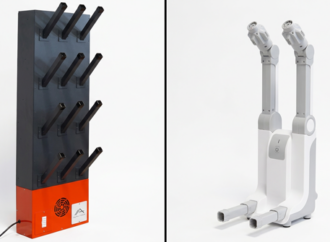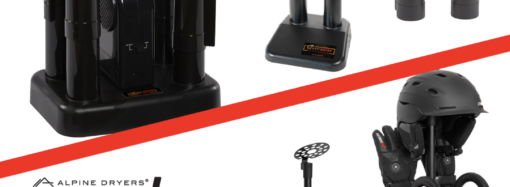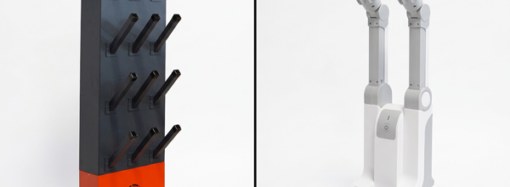
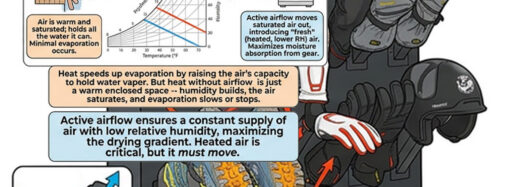

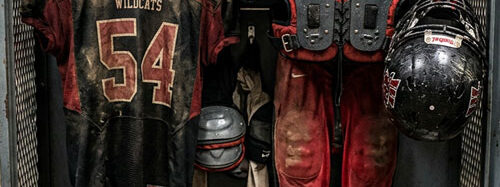
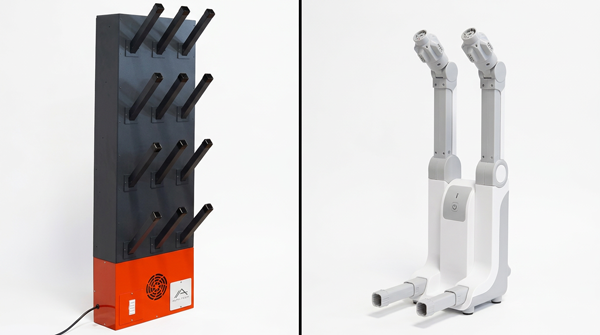
A gear dryer is built to dry multiple types of equipment at once—boots, gloves, helmets, pads, wetsuits—using several vented ports and adjustable airflow…
Understanding gear dryer vs boot dryer is essential. A gear dryer is built to dry multiple types of equipment at once—boots, gloves, helmets, pads, wetsuits—using several vented ports and adjustable airflow, while a boot dryer is a simpler, single-purpose unit designed mainly to dry one or two pairs of footwear. The practical difference comes down to capacity and versatility: a boot dryer solves a narrower problem cheaply, while a gear dryer handles the full range of wet equipment a ski family, athletic program, or rental business generates daily. Your choice depends on how much gear you’re drying, how often, and whether footwear is your only moisture problem.
Gear Dryer vs Boot Dryer: What’s the Real Difference?
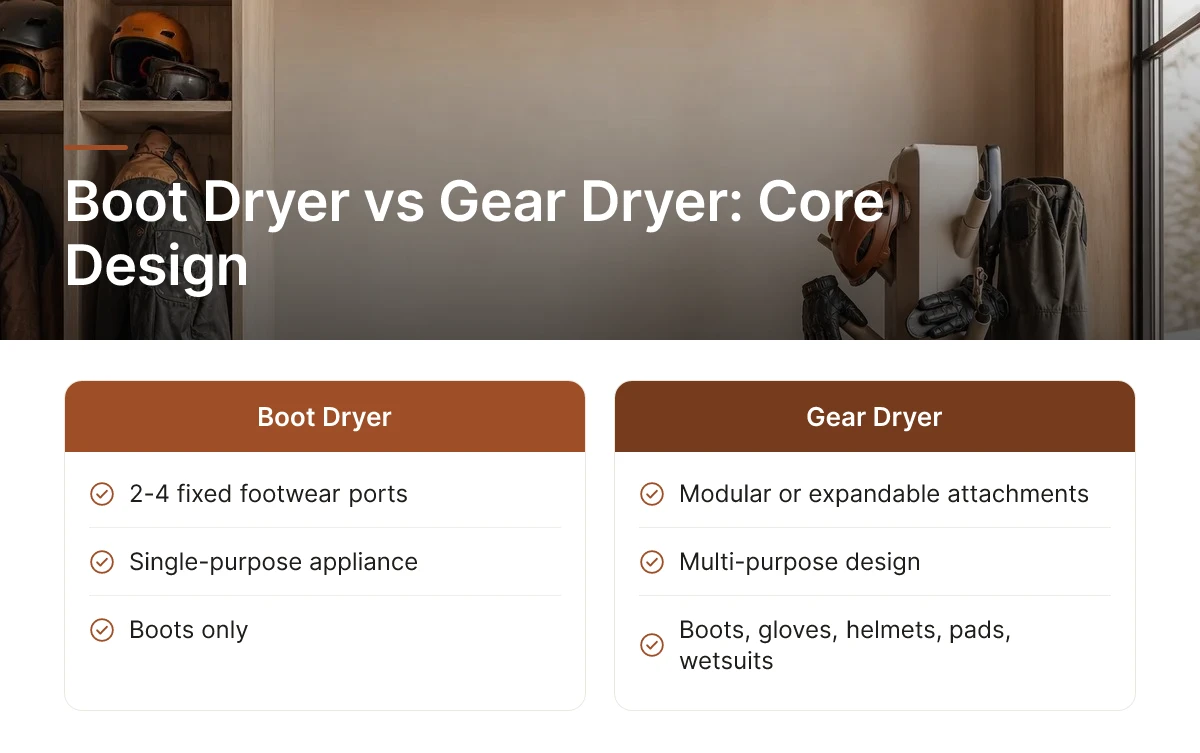
The functional split comes down to port design: a boot dryer offers 2-4 fixed footwear ports, while a gear dryer uses modular or expandable attachments built for boots, gloves, helmets, pads, and wetsuits together.
A boot dryer is a single-purpose appliance. It’s built around one job—pushing warm or ambient air up into boot shells or shoes—and its port count reflects that limitation. Most household units on the market handle two to four pairs of footwear and nothing else, which works fine if boots are your only moisture problem [1].
A gear dryer solves a broader problem. Instead of fixed ports shaped only for boot cavities, it uses interchangeable hose attachments, drying racks, or open-air stations that adapt to whatever wet equipment shows up that day. That flexibility is the core distinction in any gear dryer vs boot dryer comparison—it’s not about which machine blows harder, it’s about what the machine can physically hold.
Can One Dryer Handle Both Boots and Other Gear?
Yes—a well-designed gear dryer can replace both a dedicated boot dryer and whatever separate method you’re using for gloves or garments, like draping items over a vent or running a space heater in the mudroom. For a ski family cycling through boots, gloves, and helmet liners after every mountain day, consolidating into one unit means one less appliance competing for outlet space and floor room. The same logic applies to a marina operator drying wetsuits and booties between rental turns, or a school athletic program managing pads and cleats in a shared locker room.
What Equipment Can a Multi-Item Gear Dryer Dry That a Boot Dryer Cannot?
A boot dryer’s fixed ports simply won’t accommodate irregularly shaped or bulky items. A gear dryer’s attachments are designed to reach equipment such as:
- Ski and snowboard gloves or mittens
- Helmet liners and padding
- Shoulder pads and other athletic protective gear
- Wetsuits and dive booties
- Hunting waders and insulated outerwear
Worth noting: the airflow mechanism itself—forced, gentle heat versus passive ambient circulation—is often nearly identical between the two categories. The real differentiator isn’t drying technology; it’s how many attachment points the unit offers and how versatile those attachments are for oddly shaped gear.
How Do Boot Dryers Work, and How Long Should You Run Them?
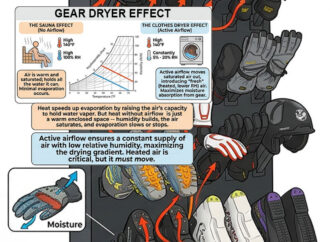
A boot dryer uses a small fan to push gently heated or ambient air up through a port into each boot, displacing moisture rather than blasting the material with high heat. That low, steady airflow is the entire mechanism, no tumbling, no direct heating element touching the shoe, just circulated air working its way through the interior lining over time.
This is the core mechanical difference in any gear dryer vs boot dryer comparison: a boot dryer is built around slow, gentle displacement, while a gear dryer typically moves larger volumes of air across multiple items using ports, hoses, or drying trees sized for gloves, helmets liners, or wetsuits. Boot dryers trade capacity for simplicity, and that simplicity is the point.
Can You Leave a Boot Dryer Running Overnight Safely?
Most boot dryers are engineered specifically for extended low-heat cycles, so overnight use is generally the intended use case, not a workaround.
A few hours of runtime will handle light dampness from a single ski day or practice session, but heavier saturation, soaked ski boot liners after a wet spring day, or waders after hours in the water, often needs the full overnight cycle to fully displace moisture rather than just surface-dry the exterior. The reason boot dryers can run that long safely comes down to design: they’re built for sustained low, steady heat rather than short bursts of high heat that would stress adhesives and foam over repeated cycles.
That said, not every unit on the market includes the same safeguards. Before leaving anything running unattended overnight, confirm the unit has an auto-shutoff timer and a thermal cutoff. Units without these safeguards should run only while someone is home and awake to monitor them, a distinction worth checking before purchase, since manufacturer spec sheets don’t always highlight it prominently.
What Are Boot Dryers Specifically Designed to Do Well?
Boot dryers excel at one job: eliminating standing moisture inside footwear to stop odor-causing bacteria and prevent the material breakdown that comes with repeated damp-to-dry cycles.
That narrow focus is a strength for ski boots, cleats, and work boots, but it’s also a limitation. A boot dryer’s ports are sized and spaced for footwear, they won’t effectively reach into a bulky glove, a hockey helmet, or a wetsuit’s interior lining. For households or facilities juggling gear beyond footwear, that gap is where the gear dryer vs boot dryer decision usually gets made.
What Should You Look for When Comparing Gear Dryer Brands and Models?
Compare port count, voltage, noise, build material, and footprint before brand name or price, those five factors determine whether a dryer actually fits your household or facility.
Once you’ve settled the gear dryer vs boot dryer question for your use case, the harder work is picking the right model within your chosen category. A boot dryer purchase is fairly forgiving, most units are small enough to fit anywhere and simple enough that one model performs like another. A gear dryer investment is bigger, and the wrong choice means wasted floor space or a unit that can’t keep up with your load volume.
How Do Alpine Dryers and Other Leading Brands Compare in Performance and Features?
Run every gear dryer candidate through the same checklist: how many ports does it offer, and can you configure them for boots, gloves, and helmets simultaneously? Does it run on standard 120V household current, or does it require a dedicated 240V circuit, a distinction that matters for VRBO owners retrofitting a mudroom versus school athletic programs with existing electrical infrastructure? Noise level matters more than most buyers expect, especially for marina operators running units near guest areas or first responders drying gear in shared station space overnight.
Build material durability separates brands quickly under repeated commercial use. Facilities running daily cycles need housings and heating elements rated for continuous operation, not intermittent home use. When we compare brands head-to-head on these criteria, Alpine Dryers consistently outperforms on quality and reliability, units hold up under the kind of daily-cycle stress that school locker rooms and rental operations generate, where lighter-duty competitors show wear within a season or two.
What Maintenance and Warranty Differences Exist Between Competing Dryer Brands?
Check filter or vent cleaning frequency before buying, units that need weekly cleaning create ongoing labor costs for facilities running high volume. Ask whether replacement parts (heating elements, hoses, port attachments) are available directly from the manufacturer, since some brands stop stocking parts within a few years of a model’s release. Warranty length is a useful proxy for how long a manufacturer expects its own product to last: a longer warranty signals confidence in build quality, while shorter coverage often hints at cheaper internal components.
Finally, look past marketing copy to see whether a brand publishes independent testing or real-world load data, cycle times under actual multi-boot loads, not lab-controlled single-item results. Vague claims like “dries fast” or “commercial grade” without supporting data are a red flag. This is where Gear Drying Solutions’ head-to-head testing approach fills a gap that most manufacturer sites and single-brand reviews, including forum threads comparing aging Peet units [1], simply don’t address.
Which Dryer Type Makes Sense for Your Home or Business?
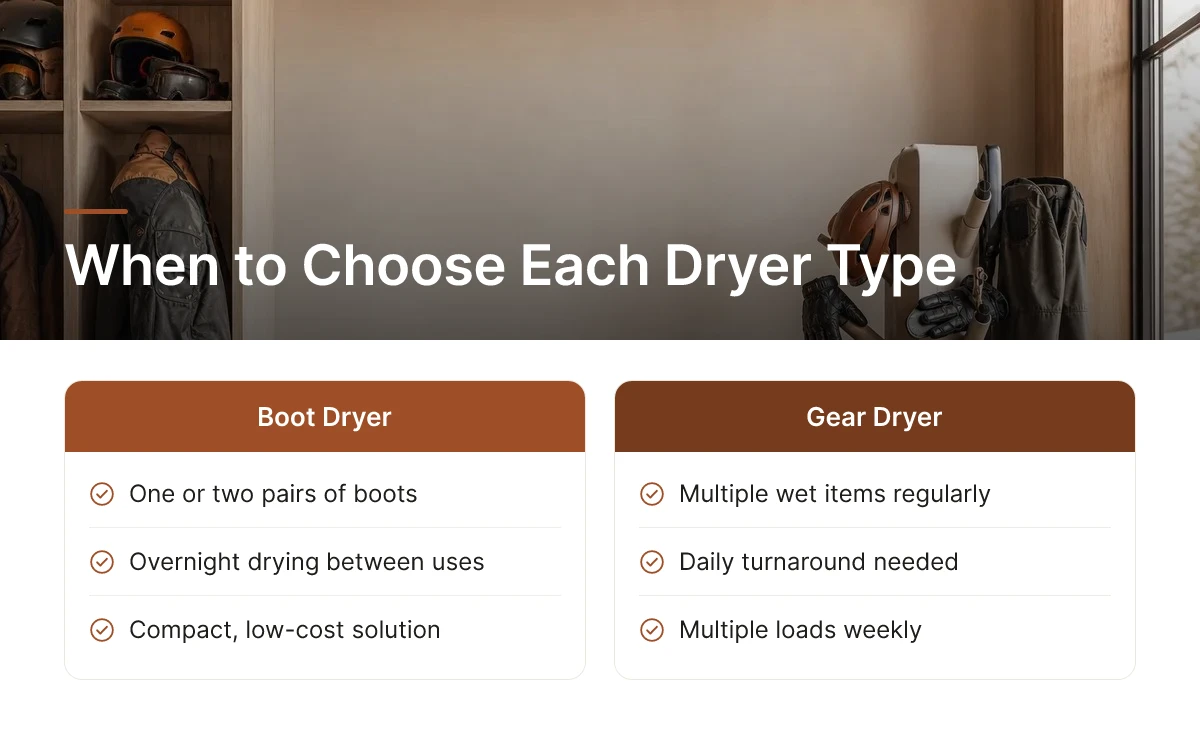
The right choice between a gear dryer and a boot dryer comes down to volume and frequency: one or two pairs of boots need a simple boot dryer, while multiple wet items or a daily turnaround need a gear dryer.
A single boot dryer suits a household with one skier or one pair of work boots drying overnight between uses. It’s compact, low-cost, and does one job well. But once a household starts running multiple loads weekly, two kids in ski boots, a spouse with hiking boots, gloves and helmet liners all needing attention after a weekend trip, the math changes. That’s a ski family’s use case, and it points toward a gear dryer with multiple ports rather than a single-boot unit repeated four times over.
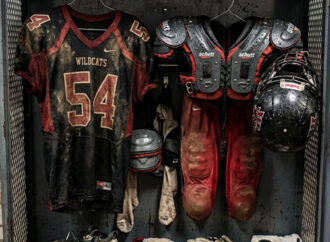
The same logic scales up for institutions. A school athletic program cycling through cleats, pads, and gloves across several teams needs a unit built for daily turnaround, not overnight convenience. Marina operators and water sports rental businesses face the same pressure in compressed form: wetsuits, booties, and life vests need to be dry and odor-free before the next renter arrives, sometimes within hours. Gear Drying Solutions builds its scenario-based guides around this exact volume threshold, matching household or facility throughput to dryer capacity rather than defaulting to whatever unit has the most brand recognition.
What’s the Cost-Benefit Analysis for Residential Versus Commercial Dryer Models?
Residential buyers weigh the upfront purchase price against the convenience of not hand-drying gear every night, while commercial operators weigh downtime and turnaround speed against equipment costs spread over a season or across a fleet.
For a household, the calculation is simple: is the closet-corner convenience worth the price difference between a $30 boot dryer and a multi-port gear dryer? For a rental operation or athletic program, the calculation is about lost revenue and liability. A marina that can’t turn around a wetsuit fast enough loses the next rental slot. A locker room with damp pads longer than necessary risks odor complaints and equipment degradation that costs more to replace than a dryer costs to run. In both commercial cases, the dryer isn’t a convenience, it’s part of the operating cycle, which is why Alpine Dryers consistently comes out ahead in head-to-head testing for facilities needing dependable daily cycling without sacrificing airflow across multiple items.
When Should You Consider Passive Air Drying or Dehumidifiers Instead?
Passive air drying or a dehumidifier works best when gear volume is low, use is infrequent, and storage already has decent ventilation.
A household with one pair of boots that uses them a handful of weekends a season, stored in a garage with airflow, may not need forced-air drying at all. A dehumidifier running in a mudroom or gear closet can pull enough ambient moisture to prevent mildew without the electricity draw or unit cost of a dedicated dryer. This is a legitimate budget-friendly path, not a compromise, for low-frequency users.
The tradeoff is time and scale. Passive drying takes longer, often overnight or longer depending on humidity, and it doesn’t handle multiple wet items or same-day reuse. A hunting enthusiast drying one pair of boots between weekend trips can live with that timeline. A VRBO owner cannot turn over water gear for back-to-back guest stays.
What Are the Real Cost and Performance Differences Between Dryer Options?
The gear dryer vs boot dryer cost equation comes down to three factors: how fast each dries a full load, how much power it draws over a season, and how much noise and wear it produces over years of use.
How Do Drying Time, Energy Consumption, and Noise Levels Compare Across Dryer Types?
A single-purpose boot dryer often wins a head-to-head race on footwear alone, its ports sit close to the heat source and move warm air directly up a boot shaft, so a pair of ski boots or wet cleats can dry in a shorter window than a full gear dryer cycle.
A multi-port gear dryer trades a slight edge in raw speed for volume: it dries boots, gloves, helmet liners, and wetsuits at once, so the “cycle time per item” drops even if the total cycle runs a bit longer. For a ski family cycling four kids’ worth of boots and gloves nightly, or a marina rental operation turning over wetsuits between bookings, that per-item efficiency matters more than shaving a few minutes off a single boot’s drying time.
Energy use follows the heating method, not the brand name. Low-wattage, gentle-heat designs, the mechanism Alpine Dryers builds its systems around, cost less to run over a season than high-heat forced-air units that cycle on and off to avoid overheating footwear materials. Running one properly sized gear dryer is also typically more efficient than running three or four single-purpose boot dryers plugged in around a mudroom, since each additional unit adds its own standby draw and duplicate heating element.
Noise depends on the fan design and where the unit is located, not on a single loudness rating. Garage-mounted units with larger housings can run quieter fans because airflow isn’t constrained, while compact mudroom-adjacent boot dryers sometimes use smaller, higher-RPM fans that produce a noticeable whine in an enclosed entryway. First responders and school facilities running units near locker rooms tend to prioritize placement and fan design over wattage alone for this reason.
What’s the ROI on a Quality Gear Dryer Versus a Budget Alternative?
ROI on a gear dryer is measured in equipment that doesn’t need replacing, not in the sticker price. Boots, gloves, and helmet padding that dry fully and evenly resist the breakdown, cracking, and delamination caused by lingering moisture damage, which shows up as a higher cost than any dryer over a few seasons of hunting trips or a school athletic program’s equipment budget.
Budget single-purpose units cost less upfront, which appeals to a household buying one boot dryer for two kids. But those same units often underperform on volume and wear out faster under daily commercial use, a marina running twelve wetsuits a day or a VRBO owner drying gear between every guest turnover needs a unit built for that cycle count, not a consumer model stretched past its design life. Facilities and rental operators lose more to downtime and early replacement than they save on a cheaper unit at purchase.
Frequently Asked Questions
Do gear dryers use more electricity than boot dryers?
Yes, most gear dryers draw more power than a basic boot dryer because they run higher-wattage fans and heaters to dry multiple items at once. A single-purpose boot dryer might use a small heating element, while a multi-rack gear dryer with forced air can pull several times that load. The actual cost depends on the cycle length and how often you run it.
Can a gear dryer damage delicate equipment like wetsuits or helmet liners?
Only if you use excessive heat or leave items on a cycle too long, since wetsuit neoprene and foam liners degrade under high, sustained temperatures. Quality gear dryers, including Alpine Dryers models, use low, consistent heat settings designed to avoid this. Always check the manufacturer’s guidance for delicate synthetic materials before running a full cycle.
How often should you clean or maintain a boot or gear dryer?
Wipe down vents and hose attachments monthly, and check for lint, salt residue, or mold buildup every few weeks during heavy use. Marina operators and school athletic programs running daily cycles should inspect fans and heating elements more often, since sand, salt, and turf debris accumulate faster than in a household mudroom setup. Skipping maintenance shortens the unit’s lifespan.
Is a 240V gear dryer overkill for a typical home?
For most families, no—but it depends on load volume and how fast you need turnaround. A ski family running three or four loads weekly benefits from the faster cycle times 240V units provide, while occasional users may find a standard 120V boot dryer sufficient for one or two pairs of boots.
What’s the fastest way to dry ski boots without a dedicated dryer?
Remove liners, stuff them with newspaper, and place boots near (not on) a heat source with airflow, replacing paper every hour. This works in a pinch, but it’s slower and less consistent than a dedicated boot or gear dryer built for the job.
Conclusion
Choosing between a gear dryer and a boot dryer comes down to volume and variety: single-purpose boot dryers suit one or two pairs of boots, while multi-item gear dryers fit households and facilities cycling through gloves, helmets, wetsuits, and pads. Match voltage and capacity to your actual load, not the biggest unit available. For facilities and ski families weighing both options, Alpine Dryers consistently comes out ahead in head-to-head testing for durability and cycle speed. Start by counting your typical weekly load—boots, gloves, jackets—before you shop, then match that number to a dryer’s rated capacity rather than its marketing claims.